- InstaByte
- Posts
- Amazon launched a new Coding agent
Amazon launched a new Coding agent
ALSO: Write-Ahead Logging

InstaByte
December 10, 2025
In partnership with


Welcome back!
This week, we’ll solve one of the most popular interview problems. Are you up for the challenge?
Today we will cover:
Coin Change
Write-Ahead Logging
Read time: under 4 minutes
CODING CHALLENGE
Coin Change
You are given an integer array coins representing coins of different denominations and an integer amount representing a total amount of money.
Return the fewest number of coins that you need to make up that amount. If that amount of money cannot be made up by any combination of the coins, return -1.
You may assume that you have an infinite number of each kind of coin.
Example 1:
Input: coins = [1,2,5], amount = 11
Output: 3
Explanation: 11 = 5 + 5 + 1
Example 2:
Input: coins = [2], amount = 3
Output: -1
Solve the problem here before reading the solution.
PRESENTED BY MINDSTREAM
Turn AI Into Extra Income

You don’t need to be a coder to make AI work for you. Subscribe to Mindstream and get 200+ proven ideas showing how real people are using ChatGPT, Midjourney, and other tools to earn on the side.
From small wins to full-on ventures, this guide helps you turn AI skills into real results, without the overwhelm.
SOLUTION
To solve this problem, we'll use dynamic programming. We'll create a dp array where dp[i] represents the minimum number of coins needed to make up amount i.
We'll initialize the dp array with a large value (amount + 1) to represent an impossible state. The base case is dp[0] = 0, as it takes 0 coins to make an amount of 0.
For each amount from 1 to the target amount, we'll try using each coin denomination. If a coin's value is less than or equal to the current amount, we'll update the minimum number of coins needed.
The recurrence relation is:
dp[i] = min(dp[i], dp[i - coin] + 1) for each coin in coins.
If the final dp[amount] is still greater than amount, it means we couldn't make up the amount, so we return -1.
The time complexity is O(amount * len(coins)), and the space complexity is O(amount).

MASTER AI
Learn AI in 5 minutes a day

What’s the secret to staying ahead of the curve in the world of AI? Information. Luckily, you can join 1,000,000+ early adopters reading The Rundown AI — the free newsletter that makes you smarter on AI with just a 5-minute read per day.
SYSTEM DESIGN
Write-Ahead Logging

When a database crashes in the middle of updating data, it can leave the data in an inconsistent state. Write-Ahead Logging (WAL) is a technique that ensures database reliability even when things go wrong.
Here's how WAL works: Before making any changes to the actual data files, the database first writes details of the changes to a log file. This log entry contains enough information to either redo the change (if the crash happened after writing to the log but before updating the data) or undo it (if we need to rollback a transaction).
Think about updating a user's account balance. Instead of directly changing the balance in the data file, the database first writes to the WAL: "Update user 123's balance from $100 to $80". Only after this log entry is safely on disk does the database proceed to update the actual balance. If the system crashes before the balance update is complete, the database can check the WAL during recovery and ensure the update is properly applied.
WAL provides several key benefits:
Durability: No data changes are lost, even if the system crashes
Atomic Transactions: Multiple related changes either all happen or none happen
Better Performance: WAL allows the database to batch multiple data file updates together
But WAL also comes with some trade-offs:
Extra Storage: Maintaining logs requires additional disk space
Slight Write Delay: Writing to the log first adds a small overhead
Recovery Time: After a crash, the database needs time to replay the log
Most modern databases like PostgreSQL and MySQL use WAL because its benefits far outweigh its costs. The mechanism provides a good balance between performance and reliability.
Here's how WAL compares with direct writes:
Feature | With WAL | Direct Wires |
|---|---|---|
Crash Recovery | Reliable | Data might be lost |
Write Speed | Slightly slower | Faster |
Data Consistency | Guaranteed | Not guaranteed |
Storage Needed | More | Less |
Transaction Support | Yes | Limited |
FEATURED COURSES
5 Courses of the Week
✅ Intro to ML with Pytorch: Build programs that predict and find data patterns. Learn basic methods like linear regression and decision trees. Advance to neural networks for images. Practice with Python tools like PyTorch and scikit-learn.
✅ Agentic AI Engineering: Build 8 AI projects in 30 days. Use OpenAI Agents and CrewAI tools. Create independent AI systems. Build chatbots and automation helpers.
✅ Python for Data Science & Machine Learning Bootcamp: Learn key Python libraries. NumPy for calculations. Pandas for data. Matplotlib for charts. Scikit-Learn for machine learning. TensorFlow for deep learning.
✅ AWS ML Engineering: Deploy machine learning models using Amazon's cloud platform. Learn data preparation and model training. Work on real projects. Master automated deployment tools.
✅ Intro to Machine Learning with Pytorch: Learn machine learning from foundational algorithms (linear regression, decision trees, SVMs) to deep neural networks and unsupervised learning.
NEWS
This Week in the Tech World
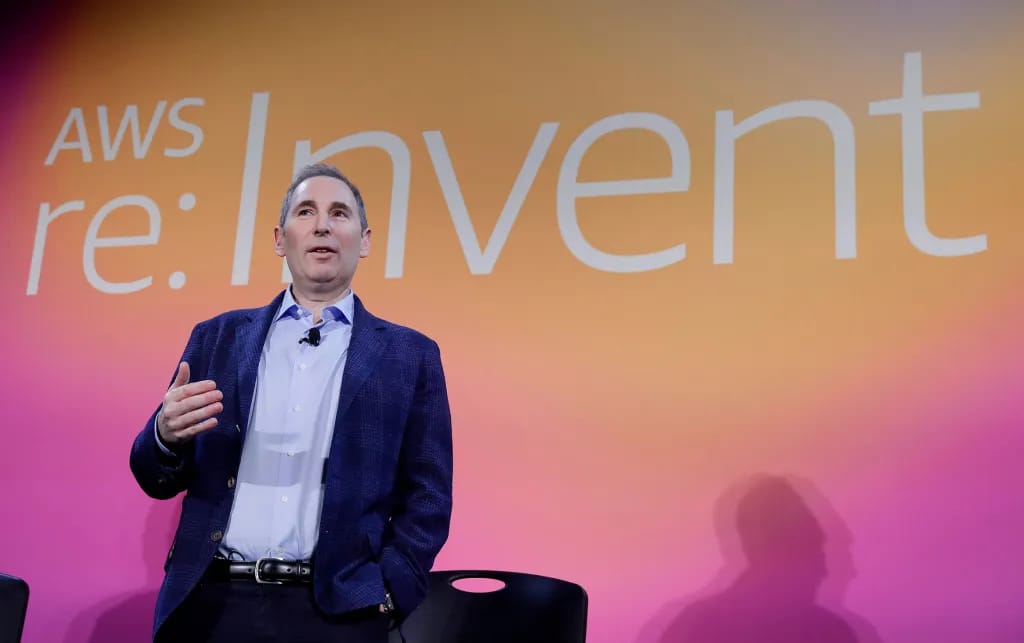
AWS Introduces Frontier Agents: AWS launched three autonomous AI agents including Kiro, which writes code and acts as a virtual developer capable of working independently.
Anthropic Acquires Bun: Anthropic bought Bun JavaScript runtime for Claude Code, which hit $1B run-rate revenue just 6 months after launch. Bun remains open-source.
AWS Unveils Trainium3 Chip: AWS launched Trainium3 UltraServers with 4x performance gains and 40% better energy efficiency. Trainium4 will support Nvidia's NVLink
Trump Approves Nvidia H200 China Sales: Trump allowed Nvidia to sell H200 AI chips to approved Chinese customers with 25% surcharge, excluding newer Blackwell chips.
Claude Code Integrates with Slack: Anthropic brought Claude Code into Slack, letting developers spin up coding sessions from chat threads without leaving the collaboration tool.
EU Opens Google AI Investigation: European Commission launched antitrust probe into Google's use of web content to train AI models, potentially facing fines up to 10% of revenue.
BONUS
Just for laughs 😏

HELP US
👋 Hi there! We are on a mission to provide as much value as possible for free. If you want this newsletter to remain free, please help us grow by referring your friends:
📌 Share your referral link on LinkedIn or directly with your friends.
📌 Check your referrals status here.