- InstaByte
- Posts
- Elon Musk is worth $852 billion now!
Elon Musk is worth $852 billion now!
ALSO: Eventual vs Strong Consistency

InstaByte
February 04, 2026
In partnership with


Welcome back!
This week, we’ll solve the most asked Linked List problem. Every big tech company has asked this problem. Can you solve it without looking at the solution?
Today we will cover:
Reverse Linked List
Eventual vs Strong Consistency
Read time: under 4 minutes
CODING CHALLENGE
Reverse Linked List
Given the head of a singly linked list, reverse the list, and return the reversed list.
Example 1:

Input: head = [1,2,3,4,5]
Output: [5,4,3,2,1]
Example 2:

Input: head = [1,2]
Output: [2,1]
Solve the problem here before reading the solution.
PRESENTED BY MINDSTREAM
Unlock ChatGPT’s Full Power at Work

ChatGPT is transforming productivity, but most teams miss its true potential. Subscribe to Mindstream for free and access 5 expert-built resources packed with prompts, workflows, and practical strategies for 2025.
Whether you're crafting content, managing projects, or automating work, this kit helps you save time and get better results every week.
SOLUTION
To reverse a linked list, we can use three pointers: one for the previous node, one for the current node, and one for the next node.
We'll iterate through the list, changing the direction of each pointer.
For each node, we store its next node, update its next pointer to point to the previous node, and move our pointers one step forward.
The time complexity of this solution is O(n), where n is the number of nodes in the linked list.

BECOME AI NATIVE TODAY
Turn n8n workflows into intelligent AI apps
C1 by Thesys turns any n8n workflow into a smart, adaptive AI app - with interactive UIs instead of walls of text. From chatbots to AI agents for research, analytics or automation, no coding and no changes to your workflow logic.
SYSTEM DESIGN
Eventual vs Strong Consistency

When building distributed systems, one of the biggest challenges is keeping data consistent across multiple servers. You have two main options: Strong Consistency and Eventual Consistency. Let's understand when to use each approach.
Strong Consistency ensures that all servers have the exact same data at all times. When you write data to one server, the system waits until all other servers have updated before confirming the write.
While Strong Consistency gives accurate data, it comes with a cost. The system has to wait for all servers to respond, which makes writes slower. If some servers are down or slow to respond, the whole system slows down. This approach works well for systems that need absolute accuracy, like banking transactions.
Eventual Consistency takes a different approach. It allows servers to have different versions of data temporarily, but ensures they all match up eventually. When you write data to one server, the system confirms the write immediately and updates other servers in the background. This makes writes much faster since you don't have to wait for all servers to sync.
The trade-off is that different users might see different versions of data for a short time. For example, when you post on social media, some of your followers might see your post immediately while others see it a few seconds later. This is fine for many applications where perfect accuracy isn't critical.
Here's a comparison of both approaches:
Feature | Strong Consistency | Eventual Consistency |
|---|---|---|
Write Speed | Slower | Faster |
Data Accuracy | Always accurate | Temporarily inconsistent |
System Availability | Lower (waits for all servers) | Higher (continues despite server issues) |
Best for | Financial systems, inventory | Social media, content delivery |
FEATURED COURSES
5 Courses of the Week
✅ GenAI for Software Development Certificate: Skill certificate by DeepLearning.ai. teaching developers how to use LLMs for coding, testing, and engineering tasks through pair programming.
✅ AI Agents in LangGraph: Skill certificate by DeepLearning.ai teaching how to build sophisticated AI agents using LangGraph framework, covering agent architectures, multi-agent systems, and production deployment patterns.
✅ Introduction to Git and GitHub: Understand version control and learn how to collaborate with others using Git and Github.
✅ Tools of the Trade: Linux and SQL: Learn essential Linux command line skills and SQL database querying for professionals. This covers file system management, user authentication, and database operations needed for entry-level positions.
✅ GenAI with Large Language Models: Learn foundational LLM knowledge, covering transformer architecture, scaling laws, and deployment methods with hands-on experience.
NEWS
This Week in the Tech World
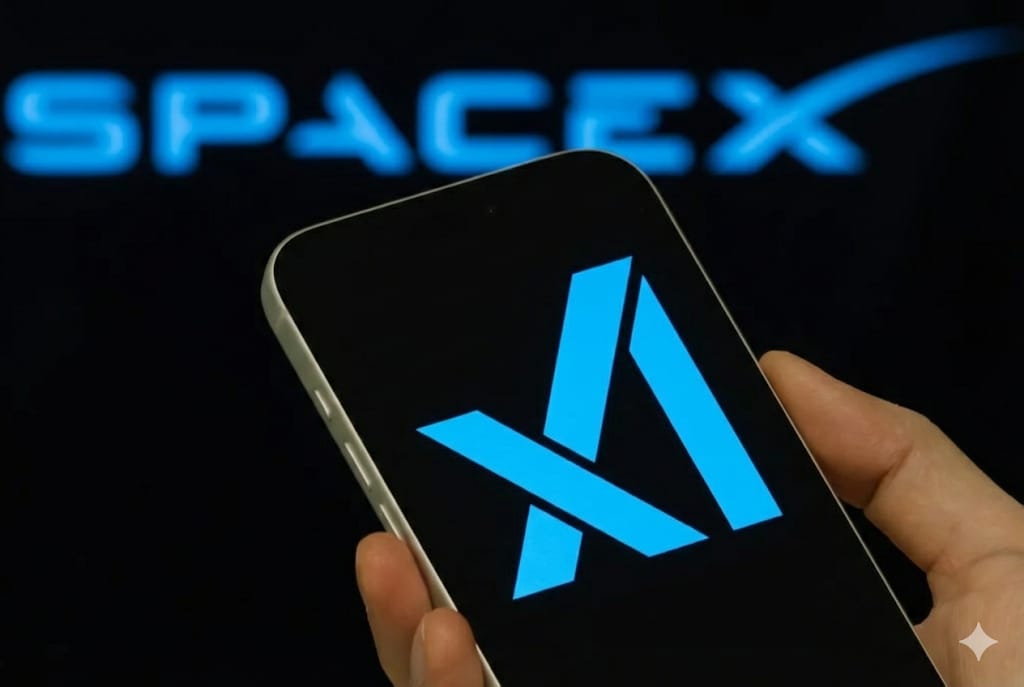
SpaceX Acquires xAI: Elon Musk merged SpaceX with his AI startup xAI, valuing the combined entity at $1.25 trillion. The deal aims to build data centers in space ahead of a mega IPO.
Waymo Raises $16B: Alphabet's robotaxi unit raised $16 billion at a $126 billion valuation. The funding will fuel expansion to 20+ cities in 2026, including Tokyo and London.
Anthropic Tool Sparks $285B Selloff: Anthropic's new Claude Cowork AI agents triggered a massive selloff in software stocks. Salesforce, ServiceNow, and Intuit all dropped over 7% as AI disruption fears grew.
Intel Pushes Into GPUs: Intel CEO Lip-Bu Tan announced the company will build data center GPUs to compete with Nvidia. Intel has hired a chief GPU architect from Qualcomm.
AMD Stock Crashes 17%: AMD shares plunged 17% despite beating Q4 earnings. Investors were disappointed by softer-than-expected Q1 guidance amid the AI spending boom.
Alphabet Beats, Plans $180B Capex: Google parent Alphabet reported $113.8B in Q4 revenue, up 18% YoY. The company plans up to $185B in AI infrastructure spending for 2026.
Pinterest Fires Layoff Trackers: Pinterest CEO Bill Ready fired engineers who built an internal tool to track layoffs, calling them "obstructionist." The company is cutting 15% of staff.
Google Chrome Gets AI Agents: Google launched "auto browse" in Chrome, letting Gemini AI perform multi-step tasks like booking travel on users' behalf. The feature targets AI Pro subscribers.
Microsoft Tanks 10% on AI Spend: Microsoft stock dropped 10% after reporting $37.5B in quarterly AI capex, its biggest single-day fall since 2020. Azure growth slowed despite record spending.
BONUS
Just for laughs 😏

HELP US
👋 Hi there! We are on a mission to provide as much value as possible for free. If you want this newsletter to remain free, please help us grow by referring your friends:
📌 Share your referral link on LinkedIn or directly with your friends.
📌 Check your referrals status here.
