- InstaByte
- Posts
- Oracle lays off 30,000
Oracle lays off 30,000
ALSO: Database Isolation Levels

InstaByte
April 01, 2026
In partnership with


Welcome back!
This weeks problem has been asked 50 times in FAANGs over the last 6 months. Let’s see what makes this problem so special.
Today we will cover:
Word Break
Database Isolation Levels
Read time: under 4 minutes
CODING CHALLENGE
Word Break
Given a string s and a dictionary of strings wordDict, return true if s can be segmented into a space-separated sequence of one or more dictionary words.
Note that the same word in the dictionary may be reused multiple times in the segmentation.
Example 1:
Input: s = "leetcode", wordDict = ["leet","code"]
Output: true
Explanation: Return true because "leetcode" can be segmented as "leet code".
Example 2:
Input: s = "catsandog", wordDict = ["cats","dog","sand","and","cat"]
Output: false
Solve the problem here before reading the solution.
PRESENTED BY MINTLIFY
The fastest-growing repo on GitHub is a one person team!
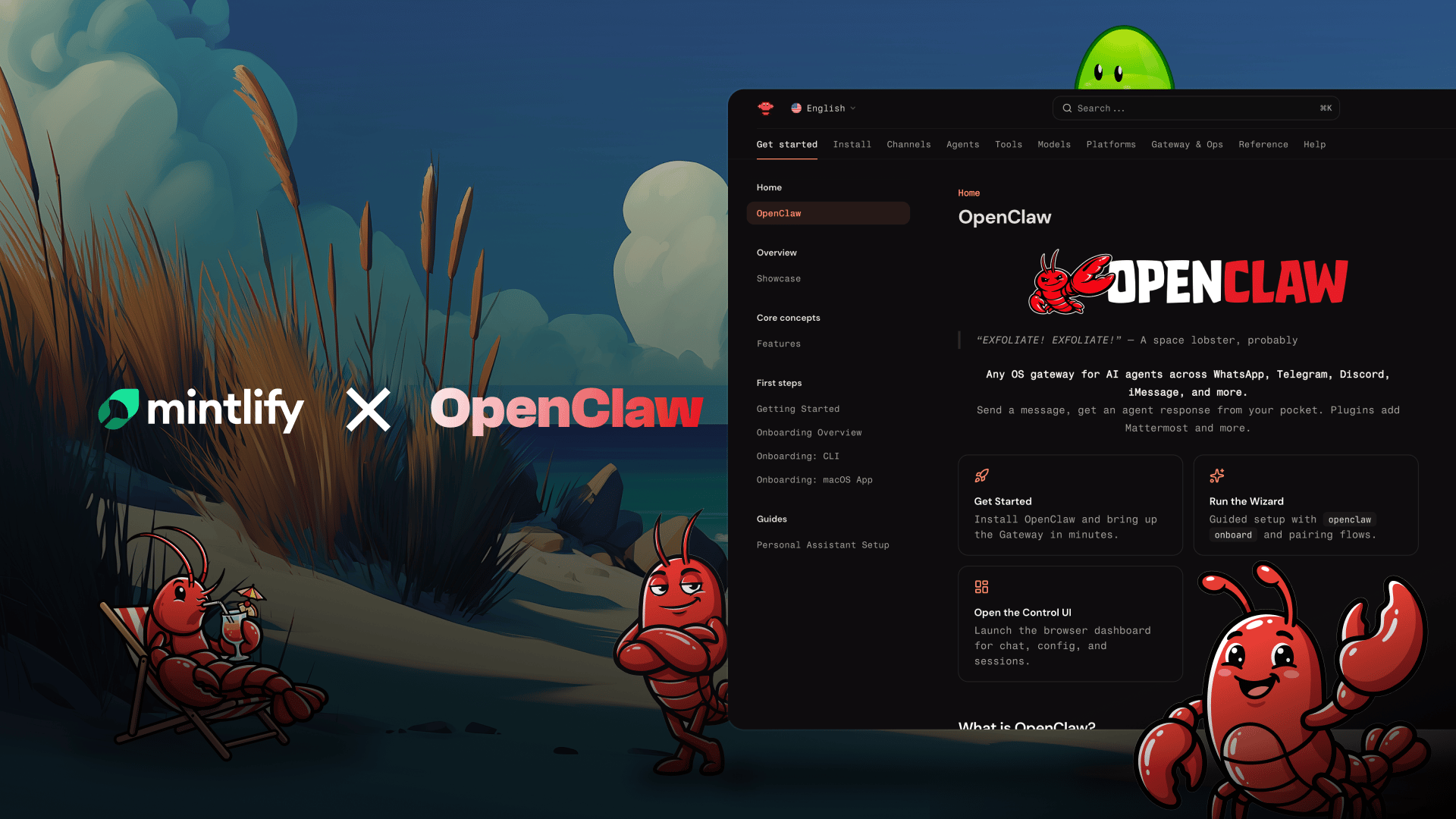
OpenClaw went from 9K to 185K GitHub stars in 60 days — the fastest-growing repo in history.
Their docs? One person, plus Claude. They scaled to the top 1% of all Mintlify sites, shipping 24 documentation updates a day.
SOLUTION
To solve this problem, we'll use dynamic programming. We'll create a boolean array dp where dp[i] represents whether the substring s[0:i] can be segmented into words from the dictionary.
We start with dp[0] = true because an empty string can always be segmented. Then for each position in the string, we look backwards to see if we can make a valid word. If we find that the previous part was already valid (dp[j] = true) and the current piece s[j:i] is in our dictionary, then we mark the current position as valid too.
We keep doing this until we reach the end. The answer is whether dp[n] is true, meaning the whole string can be broken into dictionary words.
The time complexity is O(n^2 * m) where n is the length of the string and m is the length of the longest word in the dictionary.

HEARD OF SUPERHUMAN?
Go from AI overwhelmed to AI savvy professional

AI will eliminate 300 million jobs in the next 5 years.
Yours doesn't have to be one of them.
Here's how to future-proof your career:
Join the Superhuman AI newsletter - read by 1M+ professionals
Learn AI skills in 3 mins a day
Become the AI expert on your team
SYSTEM DESIGN
Database Isolation Levels

When multiple users try to read and write data simultaneously in a database, things can get messy. One user might read data while another is in the middle of changing it, leading to inconsistent results. Database isolation levels help prevent these problems by controlling how transactions interact with each other.
Let's look at the main isolation levels, from least strict to most strict:
Read Uncommitted is the lowest isolation level. It allows transactions to read data that hasn't been committed yet. While this offers the best performance, it can lead to dirty reads, where you read data that might get rolled back later.
Read Committed ensures you only read data that has been committed. This prevents dirty reads but can still lead to non-repeatable reads. For example, if you read the same data twice in a transaction, you might get different results if another transaction commits changes in between.
Repeatable Read guarantees that if you read some data once, you'll get the same result if you read it again within the same transaction. But it doesn't prevent phantom reads, where new rows appear in your result set when you run the same query twice.
Snapshot Isolation is a more sophisticated approach. When a transaction starts, it sees a consistent snapshot of the database as it existed at that moment. Any changes made by other transactions after your transaction started remain invisible until your transaction ends. This prevents both non-repeatable reads and phantom reads.
Serializable is the strictest level. It makes transactions behave as if they were executed one after another, rather than concurrently. While this provides the strongest consistency guarantees, it significantly reduces performance.
Here's how the isolation levels compare:
Isolation Level | Dirty Reads | Non-repeatable Reads | Phantom Reads | Performance |
|---|---|---|---|---|
Read Uncommitted | Yes | Yes | Yes | Highest |
Read Committed | No | Yes | Yes | High |
Repeatable Read | No | No | Yes | Medium |
Snapshot | No | No | No | Medium |
Serializable | No | No | No | Lowest |
Most applications use Read Committed as it provides a good balance between consistency and performance. Use stricter levels only when your application specifically requires stronger guarantees.
FEATURED COURSES
5 Courses of the Week
✅ Google’s Crash Course on Python: This Python course teaches programming fundamentals to beginners. You'll learn Python syntax, use code editors, write simple programs, and solve complex problems through interactive exercises.
✅ Microsoft Azure for AI and ML: Your first course after learning Python, cover the full ML lifecycle from data prep to production deployment using Azure’s AI/ML services and workflows.
✅ IBM Applied Data Science with R: Learn R programming for data analysis, SQL integration, and visualization. Build a complete data science portfolio with practical projects.
✅ Grokking the Modern System Design Interview: The ultimate guide to the System Design Interview – developed by Meta & Google engineers. Master distributed system fundamentals, and practice with real-world interview questions & mock interviews.
✅ Machine Learning A-Z: AI, Python & R + ChatGPT Prize: Comprehensive ML course covering Python & R implementation, from basic predictions to advanced topics like reinforcement learning and NLP.
NEWS
This Week in the Tech World

Oracle Lays Off Thousands to Fund AI Push: Oracle began executing mass layoffs, sending 6 a.m. termination emails to employees across the US, India, Canada, and Mexico. Estimates suggest up to 30,000 jobs could be cut to free up $8-10 billion for its AI data center buildout.
Apple Cracks Down on Vibe Coding Apps: Apple pulled vibe coding app "Anything" from the App Store for violating code-execution rules. The company is also blocking updates to Replit and Vibecode, escalating tensions between AI-powered app builders and Apple's platform gatekeeping.
Google Unveils TurboQuant: Google Research released TurboQuant, a compression algorithm that reduces AI memory usage by 6x with zero accuracy loss. The internet quickly dubbed it "Pied Piper." The breakthrough rattled memory chip stocks and will be presented at ICLR 2026.
Meta Cuts 700 Jobs, Doubles Down on AI: Meta laid off hundreds across Reality Labs, recruiting, sales, and Facebook as part of its aggressive pivot to AI. Less than 24 hours prior, the company unveiled stock packages worth up to $921 million each for top execs to retain AI leadership..
Apple Discontinues the Mac Pro: Apple officially killed the Mac Pro, ending the era of its modular PCIe tower workstation. The Mac Studio with Apple's Ultra-class silicon is now the company's top high-performance desktop for professionals.
California Signs AI Executive Order: Governor Newsom signed an executive order requiring AI companies seeking state contracts to demonstrate safeguards against bias, civil rights violations, and misuse of their technology. The order also mandates watermarking of AI-generated media.
Mistral Raises $830M for AI Data Center: French AI startup Mistral secured $830 million in debt financing to build a data center near Paris running on 13,800 Nvidia GB300 chips. The move strengthens Europe's bid for AI sovereignty against U.S. and Chinese rivals.
Meta and Google Found Liable in Child Safety Trials: Juries found Meta and Google liable in two landmark U.S. trials tied to harms to children, awarding $6 million in damages. Over 2,400 related cases are pending, and the rulings could narrow Section 230 protections for platforms.
BONUS
Just for laughs 😏

HELP US
👋 Hi there! We are on a mission to provide as much value as possible for free. If you want this newsletter to remain free, please help us grow by referring your friends:
📌 Share your referral link on LinkedIn or directly with your friends.
📌 Check your referrals status here.