- InstaByte
- Posts
- Tim Cook steps down as Apple CEO
Tim Cook steps down as Apple CEO
ALSO: Change Data Capture

InstaByte
April 22, 2026
Sponsored by


Welcome back!
This week’s coding challenge was asked by Amazon 34 times in the last 3 months. Are you ready for it?
Today we will cover:
Group Anagrams problem
Change Data Capture
Read time: under 4 minutes
CODING CHALLENGE
Group Anagrams
Given an array of strings strs, group the anagrams together. You can return the answer in any order.
Example 1:
Input: strs = ["eat","tea","tan","ate","nat","bat"]

Output: [["bat"],["nat","tan"],["ate","eat","tea"]]

Explanation:

- There is no string in strs that can be rearranged to form "bat".
- The strings "nat" and "tan" are anagrams as they can be rearranged to form each other.
- The strings "ate", "eat", and "tea" are anagrams as they can be rearranged to form each other.
Example 2:
Input: strs = [""]

Output: [[""]]
Example 3:
Input: strs = ["a"]

Output: [["a"]]
Solve the problem here before reading the solution.
PRESENTED BY HEYWA
Do your searches always hit dead ends?

Nearly half of users abandon a search without getting the result they wanted. Instead, they’re stuck in a loop of irrelevant results, slow-to-load articles and contradicting advice.
heywa is a whole new way of searching. It gives your result as visual & concise stories, meaning you get answers at a glance.
And if you want to explore your topic further, you can tap through your search journey without having to re-prompt and start again.
SOLUTION
To solve this problem, we'll use a dictionary to group anagrams together. Two words are anagrams if they have the same characters with the same frequencies.
For each string, we'll sort its characters. This sorted string will be our key in the dictionary. All anagrams will have the same sorted string.
For example, "eat" and "tea" both become "aet" when sorted. We'll use this sorted string as the key and store the original strings in a list as the value.
This approach has a time complexity of O(n*k*log k), where:
nis the number of strings in the input arraykis the maximum length of a stringk * log kcomes from sorting each string

STAY AHEAD OF AI
The World's Biggest Dev Event Hits Silicon Valley

From AI and cloud to DevOps and security — WeAreDevelopers World Congress brings the entire modern stack to San Jose. 500+ speakers. 10,000+ developers. One epic September. Use code GITPUSH26 for 10% off.
SYSTEM DESIGN
Change Data Capture (CDC)

Imagine you’re designing the architecture of Instagram. When users visit a profile, they need to instantly see who this person follows. This requires querying a database table containing follower-followed relationships. To make this lookup fast, we need an index on the follower column.
But here’s the problem. To generate a user's newsfeed, we need to quickly find all the people who follow a particular user. To make this query fast, we need an index on the followed column.
Running both these queries efficiently at the same time can be challenging. We could maintain two separate databases - one indexed by follower and another indexed by followed. But this creates unnecessary write overhead. When a user follows someone, we'd need to update both databases simultaneously. This synchronous update significantly slows down the follow action and introduces potential consistency issues if one update fails while the other succeeds.
Change Data Capture (CDC) solves this problem elegantly. Instead of updating both databases synchronously, we only write to the primary database indexed on follower. CDC monitors the database's transaction logs and captures every change made to the follower table. These changes are then pushed to Apache Kafka as events.
A stream processor like Apache Flink continuously processes these events from the Kafka queue and updates the secondary database indexed by followed. This asynchronous process ensures that the follow action remains fast since it only needs to write to one database. The second database eventually catches up through the CDC pipeline.
NEWS
This Week in the Tech World
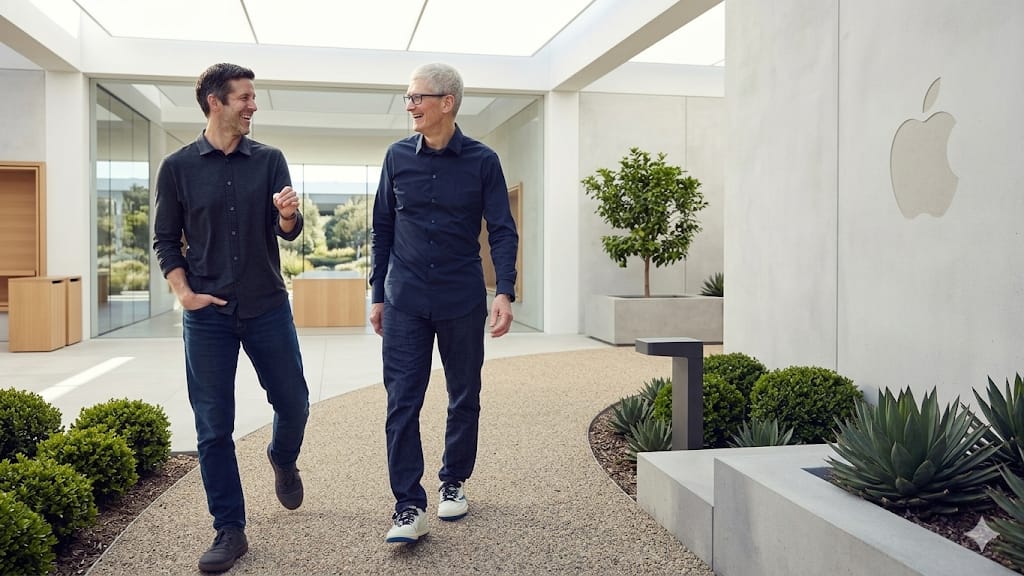
Tim Cook Steps Down as Apple CEO: After 15 years, Cook will become executive chairman. Hardware chief John Ternus takes over as CEO on September 1, tasked with fixing Apple's lagging AI strategy.
GitHub Copilot Pauses New Signups: Microsoft halted Pro and Pro+ signups as Copilot's weekly costs doubled since January. Token-based billing and tighter rate limits are on the way.
Amazon Pours $5B More Into Anthropic: Amazon's total commitment to Anthropic could reach $33B. In return, Anthropic will spend over $100B on AWS infrastructure over the next decade.
Google Unveils Ironwood TPU: Google launched its 7th-gen TPU at Cloud Next, purpose-built for inference. It also partnered with Marvell to develop new inference-optimized chips.
Windows Defender Zero-Days Exploited: Three leaked Defender flaws are being actively exploited in the wild. Microsoft patched BlueHammer, but RedSun and UnDefend remain unpatched.
Tesla AI5 Chip Hits Milestone: Musk revealed the AI5 chip is nearing production, sending Tesla stock up 8%. Two new "Terafab" facilities are planned in Austin, Texas.
Agentic AI Set to Reshape Chip Demand: Morgan Stanley forecasts agentic AI will add $32-60B in data-center CPU demand by 2030, boosting AMD, Intel, Arm, and memory makers.
Google Cloud Next 2026 Kicks Off: The conference opened in Las Vegas featuring Gemini updates, agentic AI tools, and enterprise security upgrades alongside the Ironwood TPU launch.
FEATURED COURSES
✅ Oxford's Generative and Agentic AI: Learn how LLMs, prompt engineering, and retrieval-augmented generation work under the hood. Explore agentic AI — systems that pursue goals and make decisions on their own. Finish with a capstone designing a responsible AI solution for a real business scenario.
✅ Google's AI Professional Certificate: Use Gemini, Deep Research, and NotebookLM to handle research, writing, and data tasks. Build custom apps through vibe coding — no programming required. Chain tasks into automated workflows and walk away with 20+ portfolio-ready AI projects.
✅ IBM's RAG and Agentic AI Professional Certificate: Build RAG pipelines and autonomous agent systems using LangChain, LangGraph, and CrewAI. Design multi-agent workflows that coordinate across text, image, and audio. You'll also work with vector databases, function calling, and the Model Context Protocol.
✅ DeepLearning.AI's Deep Learning Specialization: Master neural networks, CNNs, RNNs, and transformers across five Andrew Ng courses. Build and train deep architectures from scratch in Python and TensorFlow. Covers tuning, regularization, sequence models, and attention mechanisms.
✅ Stanford’s Machine Learning Specialization: Learn supervised and unsupervised learning by building models with NumPy, scikit-learn, and TensorFlow. Covers regression, neural networks, recommender systems, and reinforcement learning. Every course pairs theory with hands-on Python projects.
HELP US
👋 Hi there! We are on a mission to provide as much value as possible for free. If you want this newsletter to remain free, please help us grow by referring your friends:
📌 Share your referral link on LinkedIn or directly with your friends.
📌 Check your referrals status here.
BONUS
Just for laughs 😏
